Voice actor Rupert Degas: “Perfect Voices, Perfect Opportunity: The Brilliant Mediocrity of AI!”

We’re now in an era where brands have just six seconds to capture your attention in a world saturated with distraction. Six seconds. Down from fifteen. Which used to be thirty. Anyone remember the sixty-second TVC? Ah, Heaven! And what’s the industry’s response? Make everything sound exactly the bloody same. So says well-known voice actor Rupert Degas, in this opinion piece for CB.
There’s a particular moment in every voiceover session that tells you everything about where advertising is headed – when the creative director says, “That was great, but can we try one that’s a bit more… generic?” Generic. That beautiful euphemism for removing anything distinctive. Take out the character. Smooth the edges. File down any personality that might make someone, somewhere, realise they’re listening to an ad.
After more than thirty years doing voiceovers, I’ve become fluent in this language. “More energy” means more positive. “More authentic” means less voiceovery (if that’s not a word, it is now). “More conversational” means that specific cadence no human has ever used in an actual conversation. And “more generic”? Well… that means join the white noise, the bland, and the beige.
We’re now in an era where brands have just six seconds to capture your attention in a world saturated with distraction. Six seconds. Down from fifteen. Which used to be thirty. Anyone remember the sixty-second TVC? Ah, Heaven! And what’s the industry’s response? Make everything sound exactly the bloody same. It’s like watching every car manufacturer decide that distinctive design is risky, so now they all look like the same aerodynamic blob. Fuel efficient, but instantly forgettable, and indistinguishable from all the other cars on the road.
Which is why the arrival of AI voices isn’t the catastrophe many of my colleagues think it is. It’s the logical conclusion of what the industry has been requesting for years – the perfectly ‘generic’ voice. No regional accent that might alienate. No personality that might distract. No humanity that might accidentally connect.
Don’t get me wrong – the AI voices I’ve heard are genuinely impressive (kind of). They sound exactly like what every brief has been asking for since 2020 – warm but not too warm, friendly but professional, approachable but authoritative. They manage to sound like nobody and everybody simultaneously. But they also sound slightly off, like there’s a glitch in the matrix. Not obviously wrong, but wrong enough that your brain knows something’s amiss. It’s like those AI photos where people have eleven fingers. They’re technically proficient in a rudimentary way, but fundamentally flawed and unsettling.

And now AI voices are about to make everything sound a little bit shit too. Bloody brilliant!
Not brilliant for the industry, but brilliant for those of us who understand that in a world where you have six seconds to say “listen to me”, sounding like everyone else is commercial suicide. When every brand opts for the same ‘safe’ tone, they’re not defending their position or being unique, they’re volunteering to join the white noise.
Remember when you could identify a company just by the VO on their commercials? When brands had actual vocal identities that cut through instead of blending in? We’ve lost that in the rush toward generic acceptability. We’ve created a sonic landscape where every bank sounds like every supermarket sounds like every insurance company – all addressing us in the same therapeutically optimistic tone. Like we’re in group therapy for consumer capitalism.
It doesn’t take a genius to see that AI will accelerate this trend to its logical conclusion – completely beige sonic wallpaper. Every brand accessing the same perfect voices, delivering the same perfect energy, creating the same perfect forgettability.
And that’s when things get interesting.
Because when everyone sounds perfect, perfect becomes worthless. When everyone can generate a thousand uninspired variations of ‘warm and approachable’, the brand that sounds genuinely cold and slightly cynical might actually cut through. When every voice is optimised for universal acceptability, having a point of difference becomes revolutionary.
The smartest agencies have already figured this out. Having worked with most ad agencies (big and small) I’ve watched them realise that AI is the perfect tool to handle the functional communication.
But for the stuff that needs to create a connection? The stuff that needs to capture attention in those precious seconds? Those ads that need to make someone lean in rather than scroll past That’s where the economics of using AI falls flat on its arse!
Here’s what AI evangelists miss entirely – voice work isn’t a transaction, it’s about trust. Great work happens when someone trusts their gut enough to say “what do you think?” to the voiceover. When the combined experience in the room is allowed to go with the flow. When we stop painting by numbers and leave room for the magic to happen.
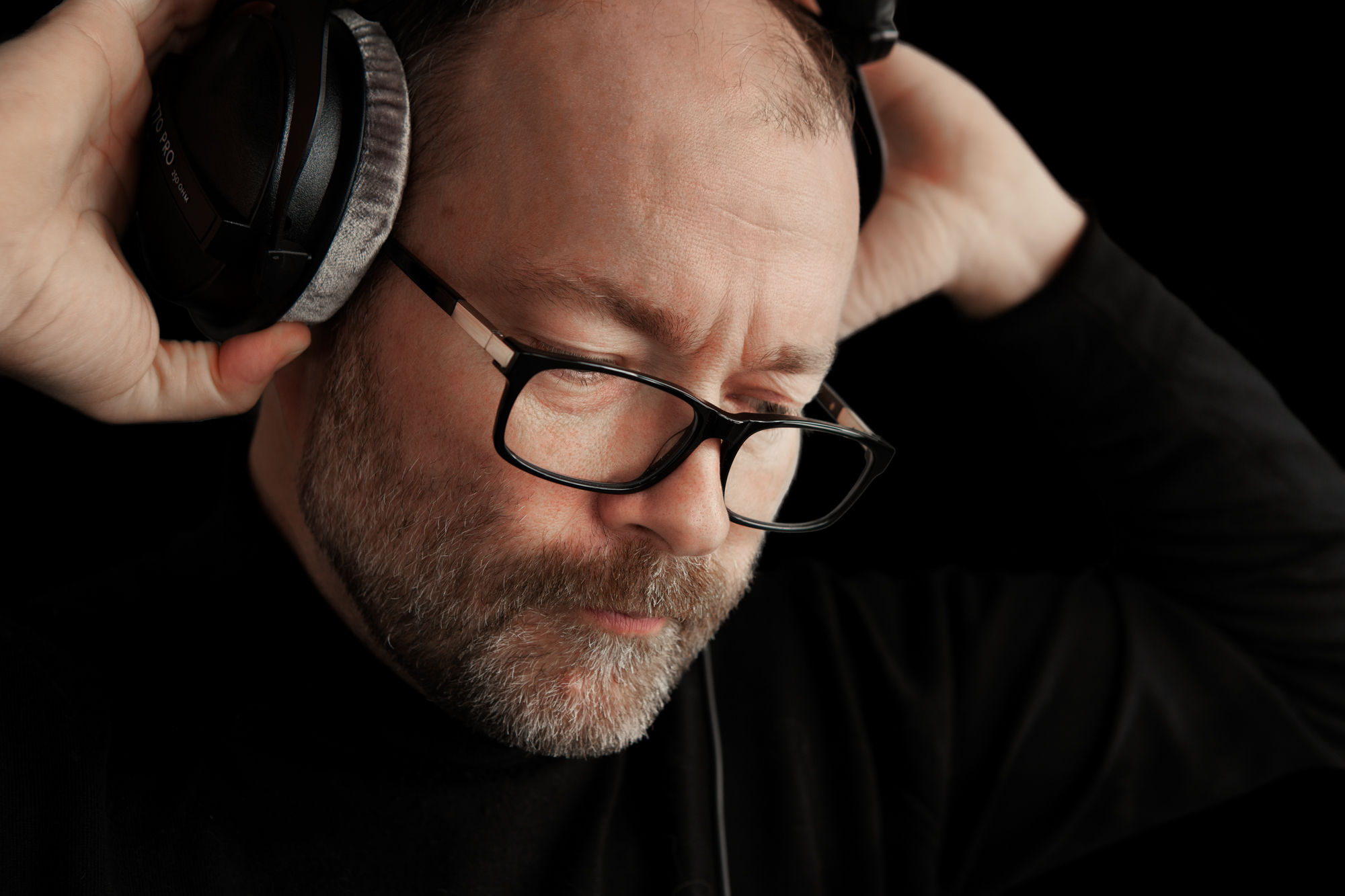
The point is, it starts with a convivial “how about this weather we’re having”, and then it’s script in hand, headphones on, and we lay one down. Then someone makes a joke. A joke that reveals what the campaign’s actually about. So we try something stupid. The stupid thing is terrible but leads to something brilliant. We play around with some voices. Loosen up the room a bit, and by take twenty, we’re doing something completely different from the brief, and everyone knows it’s right.
Everyone knows it’s awesome. Nobody planned it. And we all did it. Together.
Those magic moments? They only happen by accident. And accidents only happen when you let go. Great voice work is equal parts dark, dangerous, fun, and frivolous. Try prompting that into your LLM!
Let’s be real. AI can’t do jazz. It can’t riff. It can’t hear the creative’s nervous laugh and realise we need to go in a completely different direction. It can’t intentionally bomb a take so spectacularly that everyone relaxes and finds what they’re actually looking for. It can’t deliver ten reads in ten voices in the time your AI has said, “no problem, let me see if I can do that for you!”
Stanford University found that humans detect emotional authenticity in a voice with 95% accuracy, even in languages they don’t speak. With visual cues? We drop to 65%. Basically, your ears know when someone’s lying better than your eyes do. We’ve evolved to detect micro-tremors in vocal cords, tiny variations in breathing, the almost imperceptible ways emotion affects resonance. AI voices nail the frequencies but miss the micro-variations that come from having actual lungs, an actual larynx, and actual opinions about the script.
Simply put, the difference between an AI and a human voice isn’t technical – it’s interpretive. It’s understanding that a pause isn’t just silence, but a moment where doubt lives. It’s knowing that “we understand” can be delivered twenty different ways, and nineteen of them are lies. It’s recognising when a script is fighting against itself, and fixing it through performance, rather than committee. The brief never says, “make it sound like you don’t quite believe what you’re saying but you’re professional enough to sell it anyway”. But that’s often exactly what makes a commercial work – that tiny bit of humanity that acknowledges we all know this is advertising. AI can’t do a subtle nod or an imperceptible wink. But humans can. French film-maker Louis Malle used to decide on which takes to print by listening to audio playback with his eyes closed. There’s a truth to the human voice that AI cannot replicate.
So, to conclude, I’m not worried about AI replacing me because I’m not in the business of being ‘generic’. I’m in the business of making choices. Sometimes wrong choices that turn out right. Sometimes weird choices that nobody asked for but everyone recognises as true. And sometimes choices that just happen because we’re in the moment, never to be repeated, hoping the sound engineer recorded it! That’s not arrogance – it’s experience. Thirty years of learning that the best take is the one where something ‘human’ accidentally broke through.
There’s a fundamental choice facing brands now. Do you want to be part of the white noise, or do you want to relate? Do you want to add to the distraction, or do you want to capture attention? Because in a world where everyone has six seconds and infinite options, sounding like everyone else isn’t safe – it’s invisible.
As for me? I’m genuinely excited about AI handling the boring bits. Let it voice the disclaimers. Let it read the terms and conditions. Let it be perfectly ‘generic’. Meanwhile, I’ll be in my booth, making specific choices for brands brave enough to sound like themselves. Making sessions memorable instead of efficient. Being a collaborator instead of a service provider.
Because that’s what voice work really is – not the ability to speak clearly into a microphone, but the knowledge of what’s worth saying, and how it needs to be heard. It’s relationships, not transactions.
It’s jazz, not karaoke. It’s trusting that the magic moments – the ones that actually cut through – only happen when humans trust each other enough to let something unexpected occur.
AI makes everything sound the same. Thank goodness humans can make things sound different. Because different is what captures attention. Different is what relates. Different is what cuts through. And with six seconds to cut through the clutter, ‘different’ is everything.
Rupert Degas has spent thirty years making advertising sound human. A vocal chameleon, Degas is considered a colossus of the voice-over world, and is a damn fine actor to boot. Degas can authentically mimic almost any accent – and always nails the nuance. He remains cheerfully unpromptable. Check out his work at rupertdegas.com