
Dr Mathew Farry: Why culture work so often fails – even when the intent is there
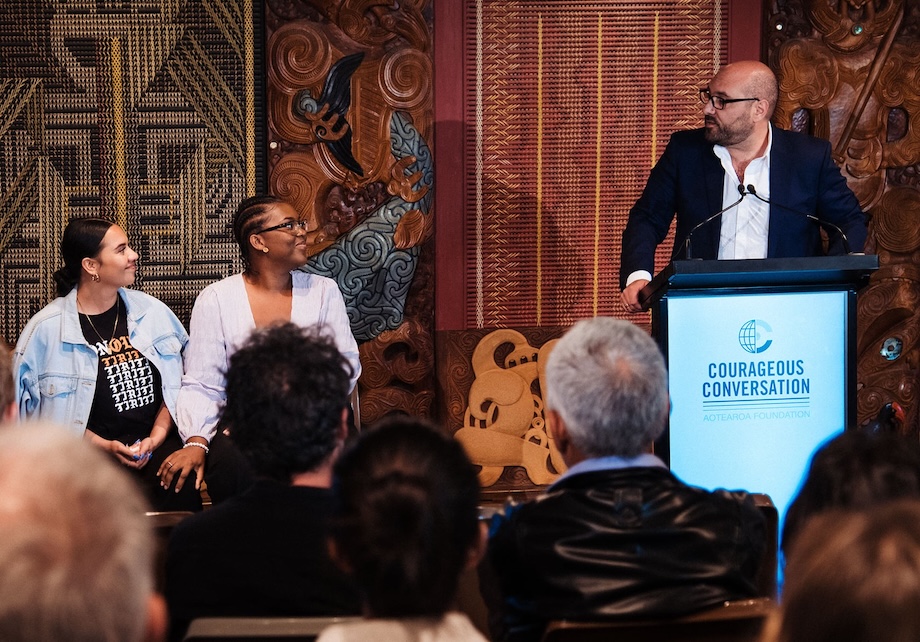
By Dr. Mathew Farry, Managing Director of Courageous Conversation South Pacific Institute®
I’ve been in too many rooms where organisations talk and make plans to change their culture, only to observe very few changes over time.
The values are clear. The strategy is in place. There is genuine intent to do the right thing. In many cases, organisations have significantly invested in culture programmes, leadership development, and internal initiatives designed to shift behaviour.
This is not because organisations lack commitment. If anything, the opposite is true. The problem is that we continue to approach fundamentally relational issues as if structure, alignment and better design alone can solve them.
We reorganise teams. We refresh values. We introduce new frameworks. We refine messaging. Of course, all this is imperative if we are to effect change however, something is missing.
It feels like we rarely get to the heart of the issue because the day-to-day experience of culture is shaped somewhere else.
It is shaped in the small, often unremarkable, seen and unseen interactions that happen every day. In how people speak to one another. In how difference is interpreted. In how decisions are made under pressure. In who is heard, who is overlooked, and how quickly assumptions are formed.
These moments are not captured in strategy documents or value statements, but they are where culture is produced.
I recognise these patterns not only through my work, but also through my own experience of moving between cultural contexts, where how you are read and understood shifts depending on the room.
In Aotearoa, this also sits within the ongoing reality of Te Tiriti o Waitangi, which continues to shape how power, partnership and responsibility are understood in organisational life.
I’ve sat in meetings where the stated values were clear, but the way people spoke to one another told a different story. Where certain voices were consistently deferred to, and others were spoken over or not returned to. None of it explicit. All of it consequential.
In industries like advertising and communications, where perception and meaning are central to the work, this becomes even more pronounced. Teams are constantly interpreting, responding, and making sense of one another, often at pace. Under pressure, those patterns become more visible, not less.
And over time, they become embedded. Once embedded, they begin to feel normal, even inevitable. They shape expectations, define what is acceptable, and quietly determine who is heard and who is not. Ultimately, the organisation suffers, missing out on valuable input and perspectives.
Eventually people adjust to these patterns. They learn what is expected, what is safe to say, and what is better left unsaid. This is where culture becomes self-reinforcing. Not because it has been formally agreed, but because it is consistently experienced.
What organisations are trying to change sits precisely in these patterns. Not just what people say they value, but how those values are lived, or not lived, in practice.
This is where culture work stalls because while the structures may shift, the way people engage with one another in the workplace does not fundamentally change. The same dynamics play out. The same assumptions hold. The same silences persist.
And those patterns are not easily disrupted.
They are tied to identity, power relations, history, and to what feels safe or risky in each moment. They are reinforced in meetings, in feedback, in informal conversations, and in the countless decisions made under time pressure.
This is where leadership becomes critical.
Not as a formal role, but as something enacted in real time, often in small, easily overlooked moments.
Not only in setting direction or articulating values, but in how leaders show up in critical moments. Whether they are willing to stay in the discomfort that comes with difference, challenges and competing perspectives.
Leaders who are serious about meaningful change must ask themselves, am I willing and able to engage in self-reflection and self-transformation. Am I willing to notice what is happening in the room and am I prepared to engage with it rather than move past it. In a nutshell, leaders must be prepared to confront the power relations that exist and reconfigure them.
Because it is in those moments that culture either reproduces itself or begins, slowly, to shift. There is no single intervention that resolves this. No framework that can be rolled out once and considered complete.
The work is ongoing, and it sits much closer to the ground than most organisational strategies recognise. However, for organisations that are serious about transforming their organisational culture, particularly in industries built on shaping perception and meaning, personal behaviour, prejudice, power, and dare I say ego must be worked on if the systemic change is to be of any consequence.